899B
SRAM, including stack
Fixed-size experience profile, measured on an emulated ATmega328P.
899B
Fixed-size experience profile, measured on an emulated ATmega328P.
4,216B
Code and data for the same bounded AVR experience profile.
≤5ms
2.57–4.99 ms at 16 MHz, including RMS comparison and sorting.
0
CPU-only computation in the reported native and AVR experiments.
Build a memory of confirmed operating examples from the actual unit, installation and load. Match new signals against that local experience.
Update a response map where new measurements disagree. In the tested function maps, distant predictions stayed unchanged.
Flag inputs outside the learned examples and request review instead of forcing a familiar label onto an unfamiliar signal.
Check proposed settings against explicit operating limits. Keep a separate path for an inadmissible or unsupported result.
Select the mechanisms your hardware can support. Put compact readouts on a microcontroller and larger models on a local gateway.
Run the selected decision logic locally. Connect learning, response models and action checks without making every inference a cloud request.
Change the conditions. Teach a new response. Watch the same device reach its target again.
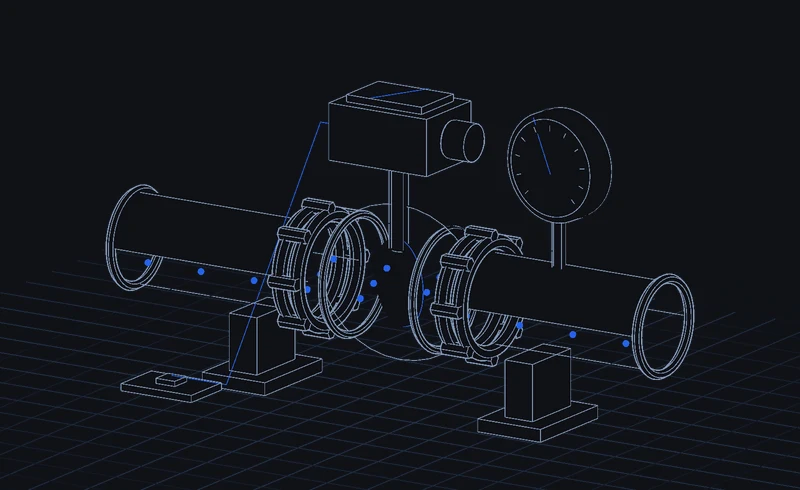
Known conditions · experience reused
The stored response provides the opening for the target flow. Change the pressure to test a different condition.
Change pressure to inspect the engine response.
Start with examples from your equipment. Use confirmed feedback to expand what it recognizes, then test the updated behavior before putting it to work.
Record signals, operating context and confirmed outcomes.
Build a compact memory or a response map for the device.
Compare with learned experience and explicit limits.
Review unfamiliar cases, then update and recheck.
Observe. Learn. Check. Refine.
Turn separate measurements into a decision workflow. Combine experience, numerical models and explicit checks to suit the job.
Recognize familiar operating patterns and flag unfamiliar inputs.
Estimate how a device will respond to a proposed setting.
Check whether the proposed setting stays within defined limits.
Explore device-specific applications with your engineering team. Match the function, memory budget and validation to the equipment.
Recognize operating patterns from current or vibration. Flag an unfamiliar signal for review, then add a confirmed example to the local memory.
For equipment manufacturers and system integrators. Scope, hardware support and pricing are defined for each project.
Add a selected, bounded function to your MCU-based product. Define the memory, timing and input contract around your firmware.
Run richer learning and decision workflows on an industrial gateway, close to your equipment and local data.
Build and qualify device-specific models with your team. Compare against your current solution before choosing a deployment.
Tell us what your device should learn, detect or decide.
Let’s define a measurable pilot.